Showing posts with label trust. Show all posts

Wednesday, February 27, 2013

9. Qualities of a Good Mentor

I have been blessed over sixty plus years to have some amazing people contribute to my life and leadership. My parents Bill and Tui, teachers like Miss Shirley Hansen, pastors like the late Owen Baragwaneth, and my nana Vera Maclennan. As an adult I have received encouragement and advice from counsellors, colleagues, and my brother Simon who is a minister down-country.  A brief example: once, when I was applying for a job before I ended up in the one I'm in now, I was downhearted at the requirement in the job description that the successful candidate be someone innovative. I am a cautious and responsible person and didn’t see myself as innovative.  But because Si had observed me at work over many years, he was able to point out a number of innovations I had led at my last church, never in a hurry but some of them quite radical. I now see innovation as one of my strengths, purely because of that mentoring conversation.

When we identify the Christian leaders who have had a positive influence on us - relatives, friends, teachers, leaders, ministers, we can usually name some qualities they have in common. Our group came up with this list: 
  • availability 
  • integrity
  • grace
  • good listener
  • wisdom
  • supportive
  • understanding. 
In his chapter "What it Takes" in Mentoring to Develop Disciples and Leaders, Mallison adds in:
  • Passionate - zealous and committed. If we find mentoring feels like a burden, perhaps it is not for us.
  • Relational - able to develop rapport, and be interested and concerned with the mentoree as a person.
  • Affirming, that is, believing in their mentoree and willing to tell them so. Even failures can be turned into genuine learning experiences.
  • Open and Transparent - able to act with integrity and speak with authenticity. This enables them to ask the tough questions when needed.
  • Trusting and Trustworthy, following up on commitments and able to keep confidences.
  • Available - timing of face to face meetings should be agreed in advance but often there is a verbal agreement that the mentoree may phone or email when struggling with a difficult issue.
  • Competent - in the areas in which the mentoree wants to grow. A person experienced in the business world may help a young adult with their career. An older mum may help a new parent with issues of child care. A minister with wide preaching experience may review a new pastor's sermons with a view to identifying their strengths and enhancing their skills. 
  • Christ Centred and Prayerful - although as covered in Post  6, this will often be implicit rather than openly spoken about.
This is quite intimidating!  But Mallison, in another chapter, writes of having an adequate idea of God, whom he sees as the Great Mentor,  and a "sane estimate" of ourselves. This phrase comes from a verse in Romans,  where Paul is giving the believers advice about Christian living. 
"Don't cherish exaggerated ideas of yourself or your importance, 
but try to have a sane estimate of your capabilities..." 
(Rom. 12:3, Phillips)

A great mentor will not be overconfident but humble and teachable, having a “sane estimate” of their strengths. None of us can exhibit all the qualities named above; God uses wounded servants,  and by grace the dynamic in mentoring is both giving and receiving. Mallison notes two  important tensions:
  1. We are both Image Bearers, who reflect God’s character, and can be channels of his grace, and Flawed, because of sin's impact on humanity, individually and together.
  2. We are both Wounded,  by the brokenness of our world, and Healers, because being "in Christ" brings salvation and hope. 
These should help us have a truly sane estimate of ourselves.

Quote of the Day:
"Prayer leads you to see new paths and to hear new melodies in the air.
Prayer is the breath of your life which gives you freedom to go and to stay where you wish and to find the many signs which point out the way to a new land. 
Praying is not simply some necessary compartment in the daily schedule of a Christian or a source of support in time of need, nor is it restricted to Sunday mornings or mealtimes. Praying is living. It is eating and drinking, action and rest, 
teaching and learning, playing and working. 
Praying pervades every aspect of our lives. 
It is the unceasing recognition that God is wherever we are, 
always inviting us to come closer 
and to celebrate the divine gift of being alive. 
(Henri Nouwen, With Open Hands)


Try to recall a few Christian leaders who have had a positive influence on you 
- relatives, friends, teachers, leaders, ministers, and more. 
Name them out loud, and be thankful.

Godshaped Mentoring is the site where Rev Viv records material shared in the Mentor Training events held in a partnership between two Baptist Churches in Auckland New Zealand in 2012 and 2013. The blog has been set up to ensure people who missed some aspect of of the training can catch up on the themes covered and skills taught, and so we can add insights and feedback as the programme takes shape. 
 

Saturday, February 16, 2013

3. One Definition of Mentoring

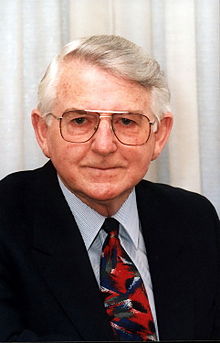
Last session we reviewed some definitions of mentoring in light of the historical meaning of this special interpersonal relationship of wisdom and encouragement. Today's post introduces the late John  Mallison’s own working definition, used extensively in his book and in his training resources, generously made available with the permission of his family. 

This definition says Mentoring is :
"a dynamic, intentional relationship of trust in which 
one person enables another to maximise the grace of God 
in their life and service." 

Mentoring is part of the fabric of life – in families, teams, workplaces. It was demonstrably present in Bible times, and has continued to be used in Christian communities over many centuries.  For example John Wesley's Methodist 'Rules' promote the relationality of Christian society, as followers of Jesus cared for each other and spurred one another on to greater faithfulness. Mallison's definition is worthy of specific analysis: 

Relationship  involves Connection, Bond, Rapport and Concern.  Good mentoring means time spent together, although once the relationship is established that togetherness may be on the phone or by Skype.

Dynamic means Stimulating, Empowering, Active, Growing. If the relationship has become  stagnant or dull, perhaps it is time to finish.
      
Intentional  - the participants meet with Purpose and  Direction - and a clear sense of hope. The setting of goals toagther, the completion of tasks by the mentoree, and the reflection of the mentor about what resources may help will keep the meetings from becoming aimless or haphazard. 

Trust takes time to develop, but as it grows so do openness and honesty. The mentor's confidentiality, competence, and credibility accompanied by their skills of active listening, affirmation and encouragement all deepen the bonds of trust. 

Enable  means to assist, to empower, to give the means to make possible. It carries the idea of a person being actively involved not just a passive listener. The imagery, says Mallison, who was once a technology teacher, is of "a busy workshop with a variety of equipment and resources, with skilled supervisors facilitating the hands-on work of apprentices," rather than that of a teacher in a lecture theatre (MTDDL, p9). Recent educational reform would characterise this as 'Guide on the Side' rather than 'Sage-on-the-Stage' . 

Maximise is about bringing out the best in someone or something. Mentoring is all aobut recognising and releasing the potential in a person, potential of which they may have never been aware. We will leave the discussion of the 'grace of God" phrase till a later post, because mentoring can be deeply transforming whether or not there is an explicit 'God-dimension'. 

Life and Service - whether or not there is faith on the part of the participants, mentoring does concern itself with using all our gifts and graces for the good of others. The equipping of leaders is an important dimension of this goal.

The Wisdom Literature of the ancient Hebrews makes this observation: 
"Two are better than one, because they have a good reward for their toil.   
For if they fall, one will lift up the other; but woe to one who is alone and falls 
 and does not have another to help."  ( Ecclesiastes 4: 9 - 10
Eugene Peterson's Message translation of the passage puts it this way: 
"It’s better to have a partner than go it
Share the work, share the wealth. 
And if one falls down, the other helps,
                 But if there’s no one to help, tough! 
Two in a bed warm each other.
                 Alone, you shiver all night. 
By yourself you’re unprotected. 
With a friend you can face the worst."

Our Quote of the Day comes from John Mallison himself: 
....in teams of varying sizes, I have sought to assess the levels of competency of each member and varied the degree of mentoring of each individual accordingly. It has been a delight to observe in my teams the development of confidence and competence that takes place through appropriate encouragement, coaching, support, and delegation of increased responsibility. I now have a network of 14o leaders whom I mentor with varying degrees of intensity.....they are frequently in my prayers." (John Mallison, OAM,  1929 - 2012)


Have you benefited from wise mentorship in a team to which you belong?  
Have you offered this kind of wise support in a team situation? 
How does Mallison's definition resonate with your experiences? 


Godshaped Mentoring is the site where Rev Viv records material shared in the Mentor Training events held in a partnership between two Baptist Churches in Auckland New Zealand in 2012 and 2013. The blog has been set up to ensure people who missed some aspect of of the training can catch up on the themes covered and skills taught, and so we can add insights and feedback as the programme takes shape.